Then & Now: 30 Years of Fort Worth’s Incredible Transformation! 🏙️✨ (1990s vs. Today)
The Fort Worth transformation over the past three decades stands as one of the most remarkable urban success stories in American history 📈. If you have spent any time around the Dallas–Fort Worth metroplex over the past thirty years, you know that dynamic growth is constant across North Texas. However, few cities have balanced explosive modern development with historic preservation quite like Cowtown 🤠⭐.
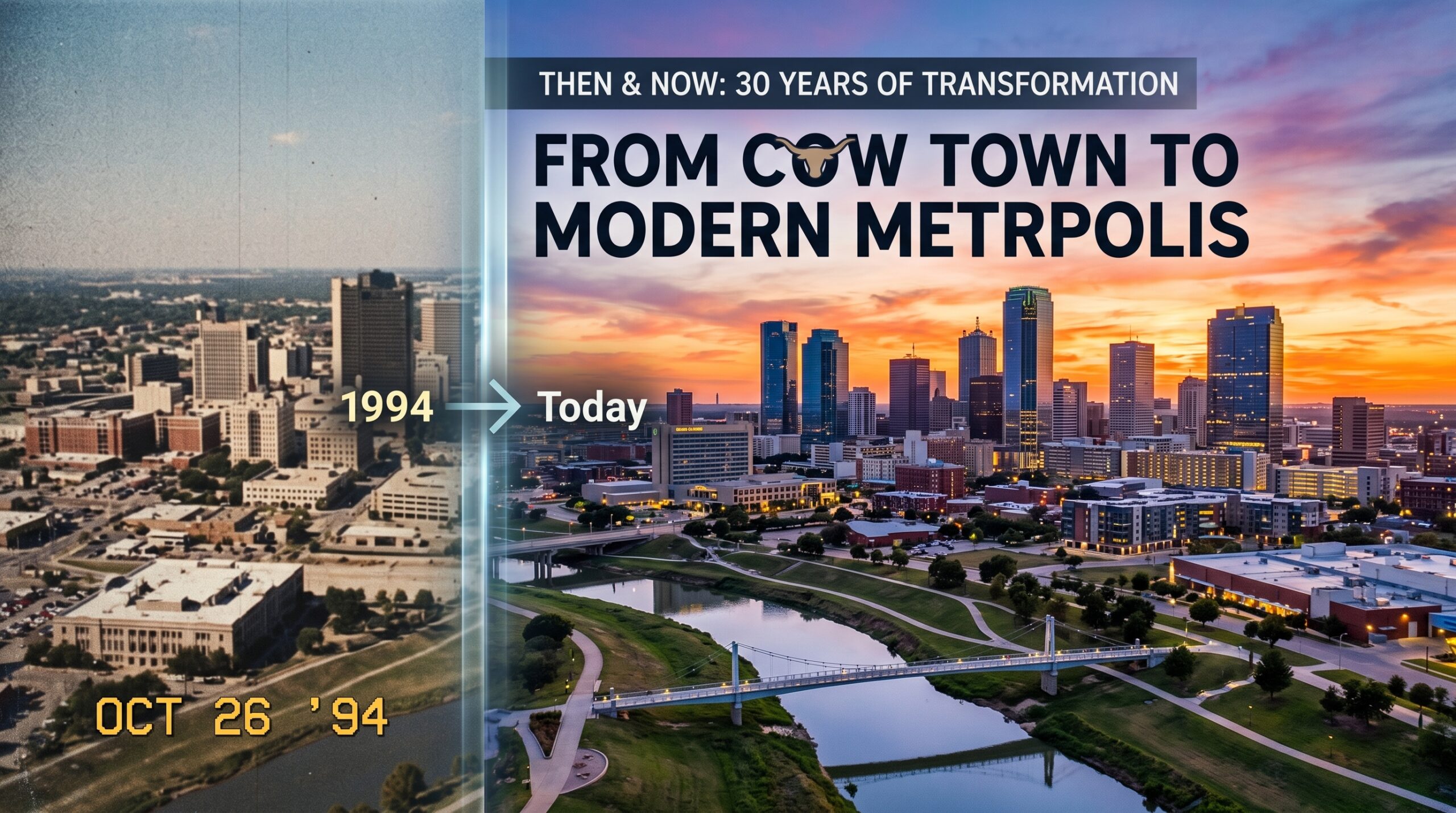
From vintage, grainy 1990s videotapes to stunning 4K drone visuals today, the visual evolution of this vibrant Texas hub tells an incredible tale of visionary planning, economic growth, and cultural pride 🚀.
Let’s take a detailed visual journey across five iconic areas that highlight this multi-decade evolution!
1. Downtown Skyline: Grainy VHS to Modern 4K 📹➡️🌆
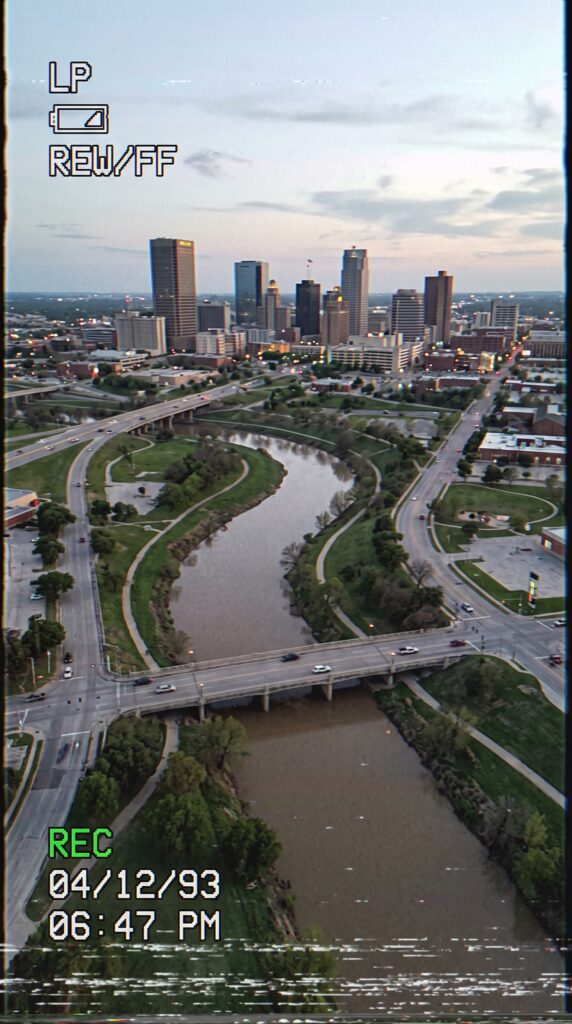
Thirty years ago, Fort Worth’s downtown core was defined by a quieter, compact skyline with classic low-rise commercial structures. Fast forward to the present day, and the visual contrast is breathtaking.
Towering contemporary glass high-rises, revitalized business headquarters, modern corporate offices, and beautifully restored historic landmarks now punctuate the horizon. The ongoing downtown Fort Worth transformation has turned the central business district into an active, 24/7 urban core where business professionals, residents, and visitors converge day and night 🏙️🔥.
2. Urban Districts & Walkable Neighborhoods 🚶♂️☕🍽️
In the early 1990s, vast stretches surrounding the downtown perimeter were dominated by quiet industrial warehouses, aging rail corridors, and open lots. Over three decades of deliberate urban revitalization, those forgotten sectors blossomed into thriving mixed-use districts 🛍️.
Neighborhoods like the West 7th corridor, Near Southside, and The Shops at Clearfork now serve as the heartbeat of modern city living. These pedestrian-friendly districts feature tree-lined sidewalks, bustling open-air patios, craft coffee roasters, independent boutiques, and premier culinary hotspots that define the ongoing urban Fort Worth transformation ✨.

3. World-Class Cultural Landmarks 🎨🏛️🎶
Fort Worth’s Cultural District has long been revered for its world-class institutions, such as the Kimbell Art Museum and the Amon Carter Museum of American Art. However, the last thirty years introduced groundbreaking architectural expansions that placed the city squarely on the international stage 🌟.
With the addition of the Modern Art Museum of Fort Worth designed by Tadao Ando, along with the state-of-the-art Dickies Arena for sports and major concerts, this cultural Fort Worth transformation has masterfully expanded the city’s reputation as a world-class arts capital 🌟.

4. Honoring Heritage at the Stockyards & Mule Alley 🐂👢🍻
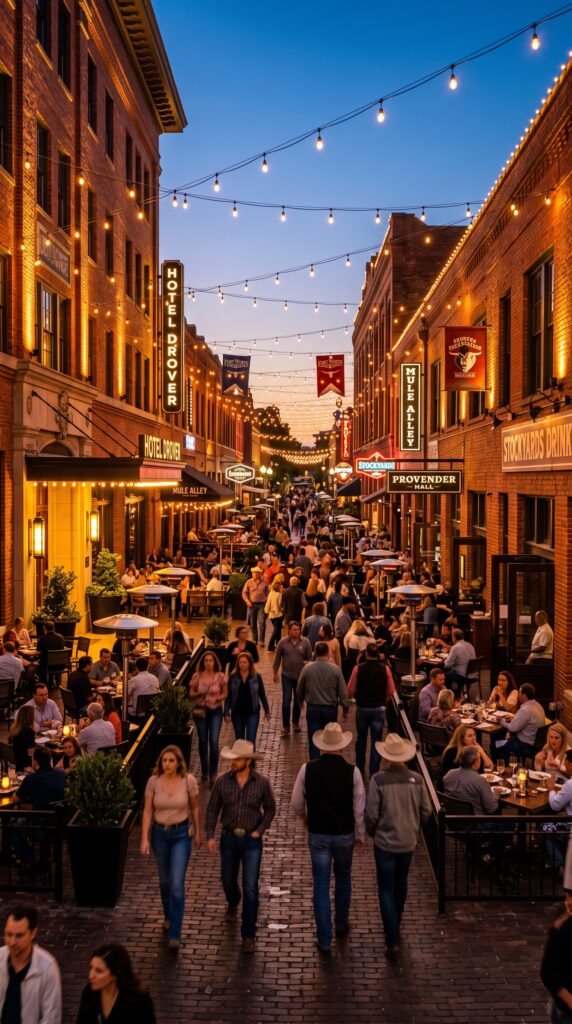
While modernization swept through much of the city, Fort Worth never lost touch with its legendary roots. The historic Fort Worth Stockyards National Historic District represents one of the most thoughtful preservation projects in Texas 🐂.
Instead of replacing history, developers carefully restored centuries-old horse and mule barns to create Mule Alley—a vibrant destination filled with heritage dining, live Texas country music, western retail flagships, and boutique luxury hotels like Hotel Drover. It represents a balanced Fort Worth transformation where genuine cowboy heritage effortlessly intersects with modern luxury nightlife 🎸🐎.
5. The Trinity River Waterfront 🌊🌿🌅
Flowing directly alongside the expanding city center, the Trinity River has evolved into a centerpiece of outdoor recreation and scenic beauty. Decades of civic investments coordinated by the Trinity Trails network have transformed the riverbanks with illuminated suspension bridges, paved multi-use trails, and waterfront parks 🚴♀️🌳.
Connecting over 100 miles of continuous greenway throughout Fort Worth, the trails system links historic neighborhoods directly to the sunset skyline, completing this dynamic 30-year Fort Worth transformation🚴♀️🌳.

Join the Conversation 💬👇
What part of the Fort Worth transformation has impressed you the most over the years? Do you miss the quieter 1990s charm, or do you love the energy of today’s modern skyline and entertainment districts?
Leave a comment below to share your memories, check out our latest DFW local guides and weekend events, and stay connected with Free in DFW for more community highlights across North Texas! 🎉📍
